
The University of Rhode Island has a new home for its championship-winning track and field programs, and itis far more than a place to run laps.
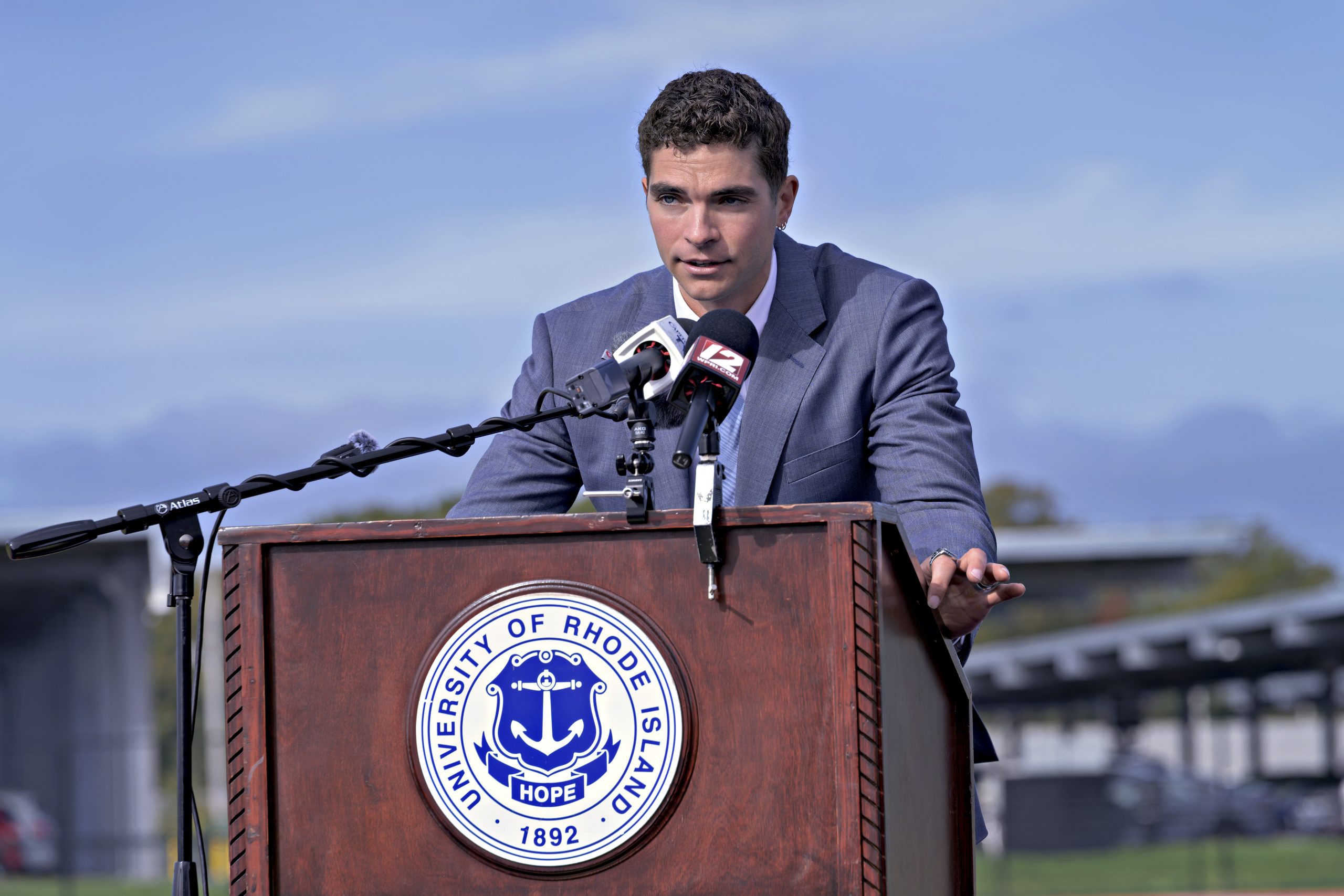
The university officially opened its new outdoor track and field complex on Oct. 21 with a ribbon-cutting ceremony at its Kingston campus. Designed to Olympic-calibre specifications, the facility is part of a broader $65.8-million investment in URI athletic facilities.
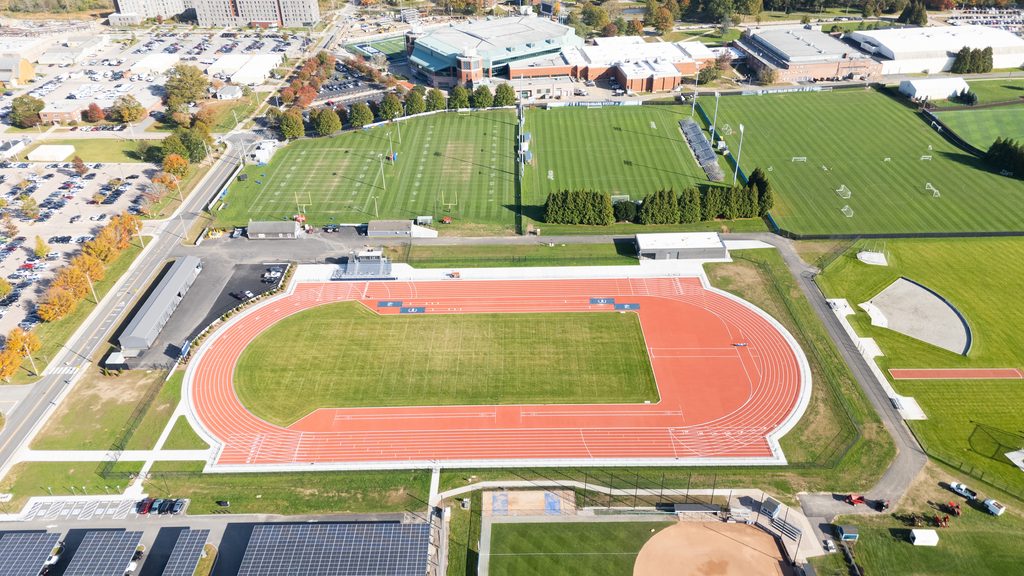
The nine-lane track is accompanied by an extensive collection of field-event infrastructure, including multiple jumping runways, pole vault facilities and a separate throwing complex. In short, the university has built a facility intended to accommodate considerably more than the occasional campus meet.
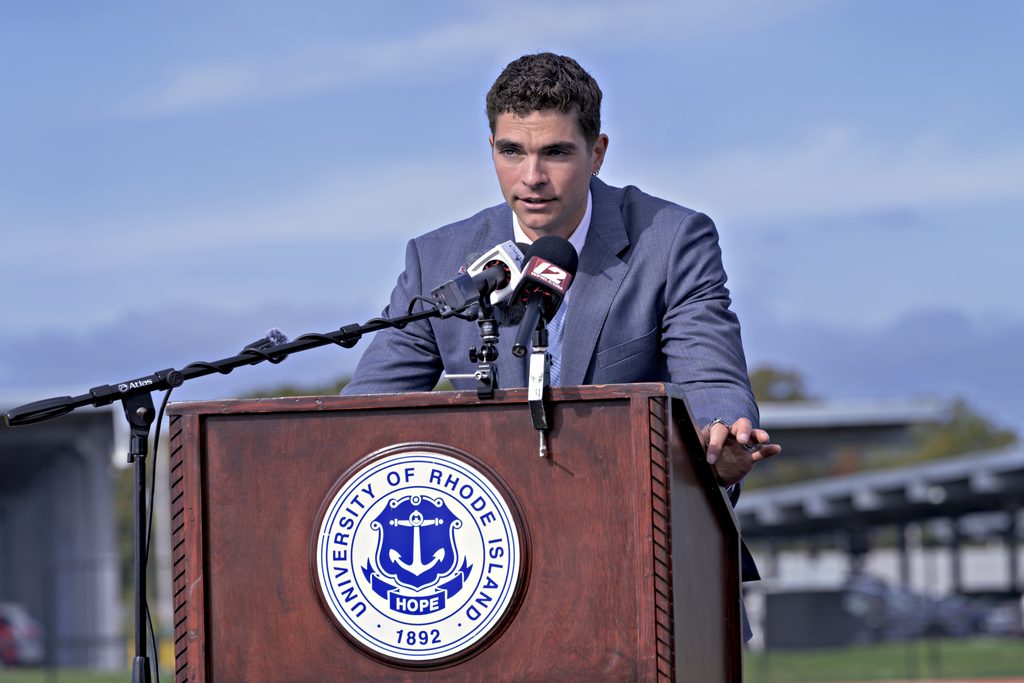
“These are championship-calibre student-athletes who deserve championship-calibre facilities,” said URI President Marc Parlange.
URI men’s track and field head coach Trent Baltzell was equally enthusiastic, suggesting the finished product exceeded expectations established during the original design process.
“What you see in front of you is beyond what we coaches were imagining during the initial design process,” Baltzell said. “From a functionality and meet management perspective, this track and field facility has no equal in this region of the country.”
That is a substantial claim, although the specifications give the university something to support it.
The complex features a nine-lane track, multiple jumping runways, including two long and triple jump runways serving four sand pits, two pole vault runways with four vault boxes, and two high jump areas.
Throwing events have their own dedicated space for hammer, javelin, shot put and discus.
The supporting infrastructure includes an aluminum bleacher grandstand, a press box with an accessible lift, a digital scoreboard, dedicated track storage, and additional support facilities.
There is also an interesting geographical consideration. The facility occupies a traditionally windy section of the URI campus. For athletes competing in events where a few centimetres or hundredths of a second can separate a personal best from a missed opportunity, wind direction matters.
Baltzell, however, sees the prevailing conditions as an advantage.
“The track is oriented in a south-to-north fashion, which coincides with the primary wind direction,” he explained. “Athletes are going to move faster when having a wind at their backs. Sprinters, hurdlers, pole vaulters, long jumpers, and triple jumpers are going to love competing at URI.”
Should the wind turn south, the university can reverse the direction of competition.
It is a practical consideration, particularly for a facility that hopes to attract major competitions and produce performances worth remembering.
A return to outdoor competition
One of the more significant dates on the university’s calendar is April 3, 2027. That is when URI will host an outdoor track and field meet for the first time in 32 years.
The Rams will welcome teams from other Rhode Island colleges and universities for the Ocean State Cup.
Women’s head coach Laurie Feit-Melnick, who has led the program since 1992, sees the facility as an opportunity extending well beyond the university’s own athletes.
“This is not just a tremendous addition for our current and future athletes, but for the entire athletic department, the URI community and the state of Rhode Island,” she said.
Feit-Melnick also outlined plans to host the Atlantic 10 Conference outdoor championships, the Rhode Island Interscholastic League high school state meet and Rhode Island Special Olympics events, alongside training camps and clinics.
The facility could therefore become an important venue for athletes at several levels of the sport, from university competitors to high school athletes and younger participants.
Two fifth-year student-athletes, Lily Saul and Adam Melnick, represented URI’s women’s and men’s championship teams at the opening ceremony.
Saul, from Montoursville, Pennsylvania, believes the investment will have a lasting effect on recruitment and athlete development.
“This facility will have an incredible impact on the future of URI track and field,” she said. “It will help us continue to develop as athletes, compete at a higher level, and attract talented student-athletes who want to be part of a program that is investing in its future.”
Melnick, who grew up in nearby Narragansett, was particularly enthusiastic about the opportunities for athletes across Rhode Island.
“To have a world-class facility right here in our own backyard is a tremendous opportunity for athletes of all ages,” he said. “This is something I would have loved to have as a young athlete.”
A significant investment in the sport
The opening ceremony also recognized the state officials, university leadership and private donors who helped make the project possible.
URI President Parlange acknowledged the contributions of Governor Dan McKee, legislative leaders and representatives from the South County delegation.
University Vice President and Director of Athletics Pat Lyons thanked those involved in fundraising, planning and construction, while emphasizing the university’s intention to make the facility a regular destination for track and field competition.
A notable contribution came from Peter Sherman, a 1997 graduate, and Jocelyn Sherman, a 2000 graduate who also earned a master’s degree in 2022. Both were former URI student-athletes: Peter competed in the hammer throw, while Jocelyn competed in the javelin.
Their donation, made in memory of friend and teammate Stephen DeMinico, who graduated in 1998, will support the naming of the hammer and javelin areas.
For URI, the project represents another step in a broader campus redevelopment effort. For track and field in Rhode Island, it offers something more tangible: a modern competition venue capable of accommodating a wide range of events and athletes.
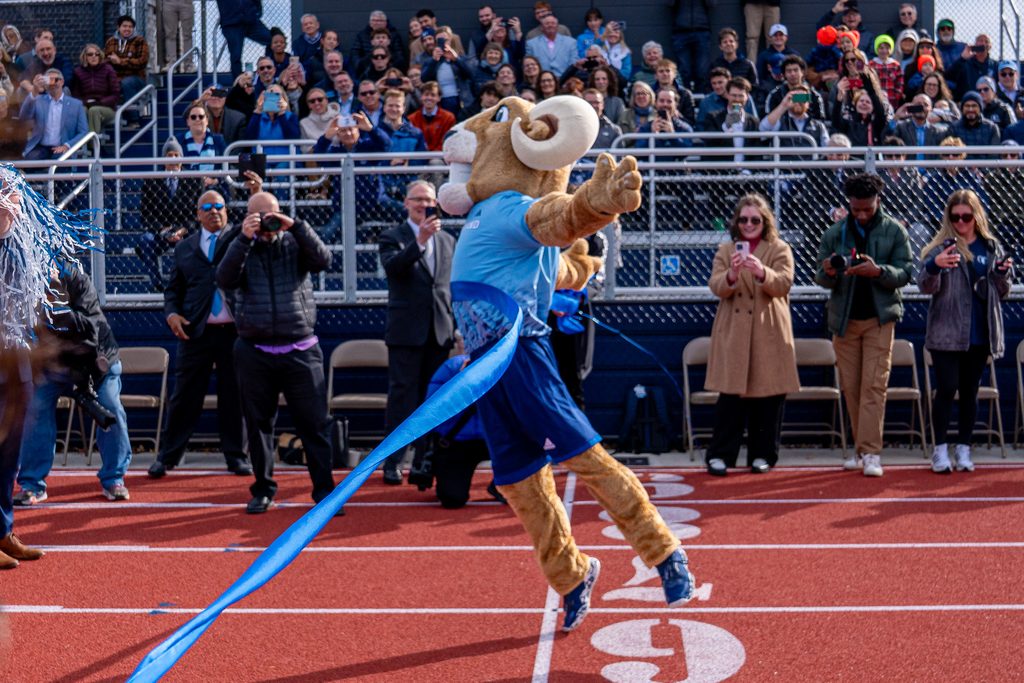
The ceremony concluded with the university mascot, Rhody, making a slow-motion dash through the ribbon to the theme from Chariots of Fire.
It was an appropriately theatrical finish. The more meaningful test, however, comes next April, when the track finally gets to do what it was built to do.