What happens if Lilian Kasait Rengeruk of Kenya wins or runs a sub-2:15 marathon in Valencia this Sunday?
In September 2022, it was announced that Rengeruk had been banned from athletics for a period of 10 months. The doping ban was backdated to April 2022. She tested positive for the hormone therapy drug Letrozole.
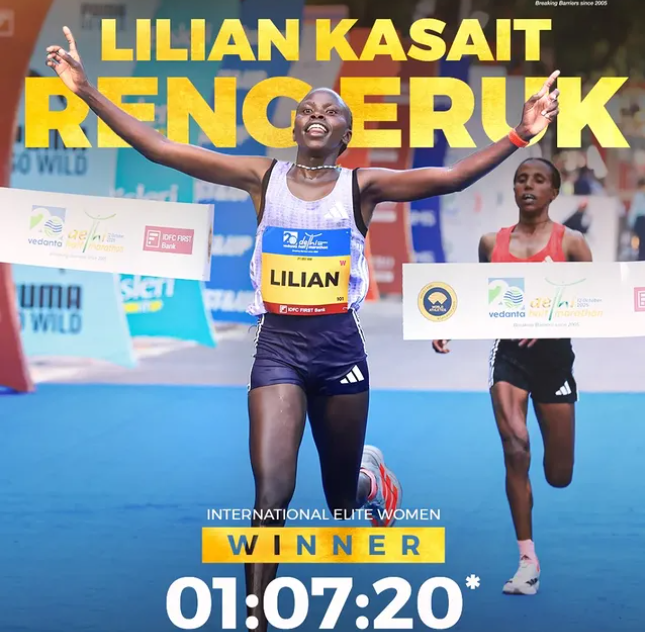
Since coming back from the ban, the now 28-year-old has run world-class times. For example, 29:26.89 for 10,000 metres, which is the sixth-fastest time in history. Rengeruk has also run 29:32 in the 10 km distance on the roads. Her half-marathon personal best is the fourth fastest in history at 1:03:32. Meanwhile she has run the 5000m and 5km road events in 14:23.05 and 14:26, respectively.
All of the above performances came after her return from the doping ban.
The drug she was caught for…
The first concern is why events allow dopers or former dopers to continue to compete?
Letrozole (brand name Femara®) is an oral prescription medication. It is used primarily as hormone therapy to treat certain types of breast cancer in postmenopausal women. It belongs to a class of drugs called aromatase inhibitors.
Letrozole works by blocking the enzyme aromatase, which the body uses to produce estrogen after menopause. By significantly reducing estrogen levels, it slows or stops the growth of breast cancer cells.
Letrozole is banned by the World Anti-Doping Agency because athletes are known to manage the side effects of anabolic steroid use. It also artificially boosts natural testosterone levels.
All of her 2022 results have been removed from the World Athletics records books. In her comeback in 2023, she raced at least 16 times, 14 of those races in six months. While not an impossible schedule, it was very busy. She performed well throughout the year, including setting her lifetime PBs in the 1500m, 3000m, 5000m, and 5 km.
During 2024, she cooled her heels a little and raced just 10 times over the 12 months. But had moved up to the 10,000m and half-marathon where she set her lifetime PBs over those distances. She also raced cross-country. During 2025, her racing schedule is lighter yet again, except, she has raced primarily over the half-marathon distance. Her results were fast at 1:05:27, 1:07:20, and 1:07:36. Rengeruk finished fourth in the Kenyan Cross Country Trials in October, clocking a 34:31 performance.
What happens this Sunday in Valencia will be interesting. Her previous performances suggest she should be competitive. And will likely keep up with Olympic and World Championships gold medallist Peres Jepchirchir for most of the race.
Statement on Valencia’s website:
Valencia has mandatory doping control, as World Athletics sanctions the race. The race also has additional integrity measures. These include collaborating with the Athletics Integrity Unit to conduct intelligence-led testing. Also, not contracting athletes with previous serious doping bans.
The race organizers will not invite professional athletes who have been disqualified for serious doping offences. Cash money is held back until test results are returned as negative.
STATEMENT: “Valencia was the first organisation ever in the World Athletics Championships that voluntarily contributed $50,000 in 2018 for surprise controls. Like other top international races, it does not contract athletes who have been definitively sanctioned for serious doping offenses, regardless of whether the ban has elapsed. Annually, the Valencia Marathon and Half-Marathon directly spend over €35,000 on anti-doping tests and the provision of the right facilities for carrying them out. Furthermore, annual payments of over $70,000 are made to World Athletics under the Road Running Label programme, which World Athletics earmarks to biological passport controls.”
Perhaps the organizers are not aware that Rengeruk has served a ban for masking anabolic steroids or artificially increasing testosterone.