
East Germany’s doping legacy demands reckoning
From the 1960s to the 1980s, East Germany emerged as a dominant force in the Olympic movement. Its athletes amassed medals at an extraordinary rate, often outperforming competitors from much larger nations. At the time, those performances were celebrated as evidence of sporting excellence and national achievement.
History has since revealed a darker reality.
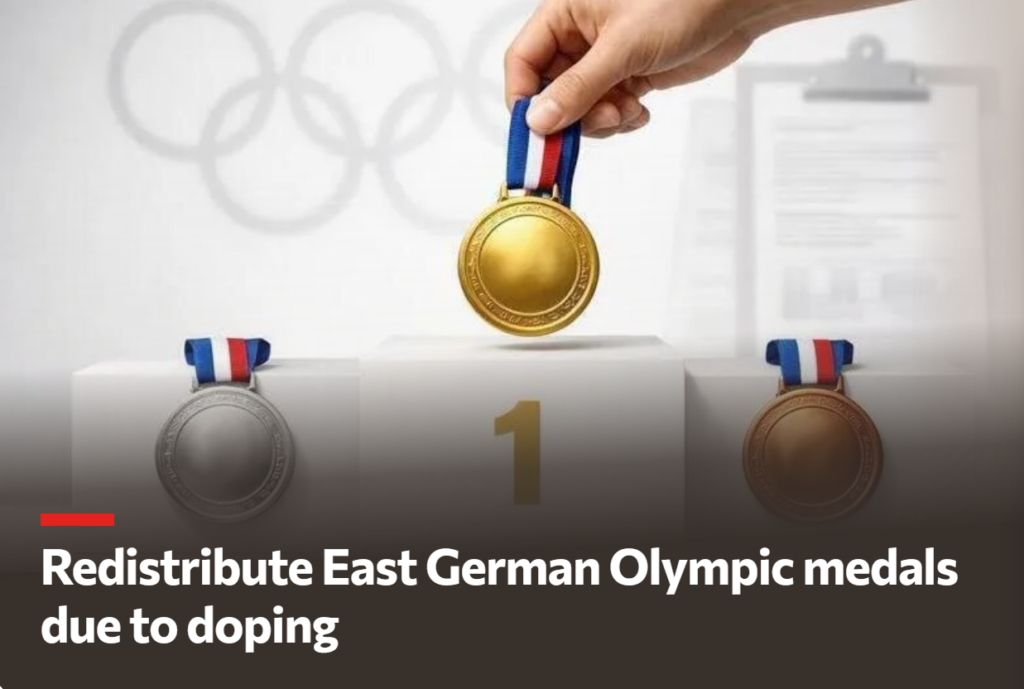
Following the fall of the Berlin Wall and the subsequent opening of Stasi archives, extensive documentation exposed what is now widely recognized as one of the most systematic state-sponsored doping programs in sporting history. Through investigative journalism, academic research, and government records, it has become clear that East German authorities orchestrated the administration of performance-enhancing drugs to thousands of athletes, many of whom were minors and many of whom were not fully informed about the substances they were receiving.
The consequences extended far beyond medal counts.
Clean athletes were denied opportunities, podium places, and, in some cases, Olympic medals. An uneven playing field altered careers, sponsorships, and legacies. Meanwhile, numerous East German athletes later reported significant health complications linked to the doping program imposed upon them.
The evidence is no longer in dispute. What remains unresolved is how the sporting community chooses to address the historical record.
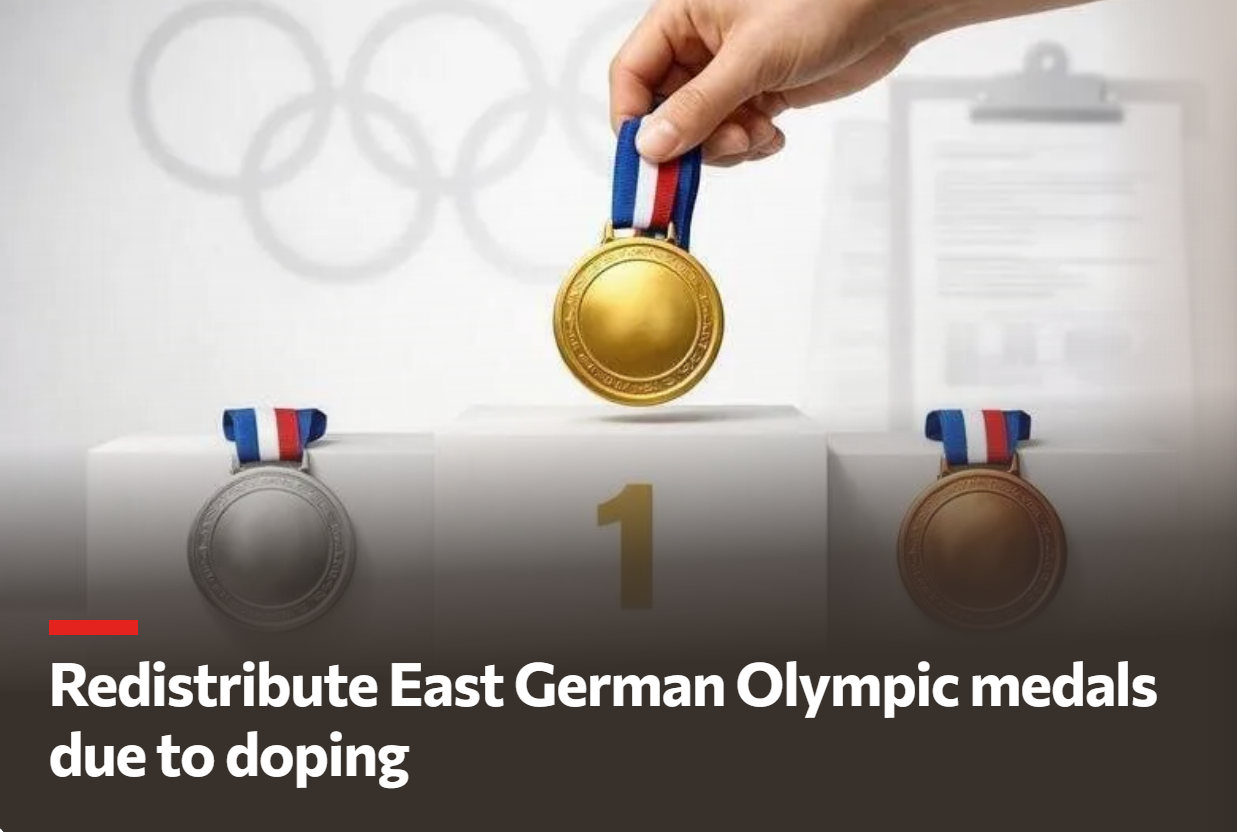
The International Olympic Committee has a responsibility to examine whether medals and results obtained through a government-directed doping system should continue to stand unchallenged. While the passage of time complicates any remedy, justice delayed should not automatically become justice denied. A transparent review process could acknowledge athletes who competed fairly and help restore confidence in the Olympic commitment to integrity and fair competition.
The Olympic Games are intended to celebrate human performance, perseverance, and sportsmanship. Those ideals are diminished when known violations of fairness remain unaddressed. Confronting the legacy of East Germany’s doping system is not about revisiting history for its own sake; it is about ensuring that the values the Olympic Movement claims to uphold are applied consistently, regardless of how much time has passed.
Athletes who competed clean deserve recognition. The historical record deserves accuracy. And the Olympic Games deserve accountability.
A standard for future redistribution
Areas of concentrated doping continue to emerge in global athletics. Several of them warrant a full reckoning—including the redistribution of medals where appropriate. A clear precedent exists for revisiting results from jurisdictions where organized or state‑enabled doping has been documented. Also, a broader petition for systematic medal redistribution could reasonably follow.
Russia, for example, has been banned for more than a decade due to its state‑run doping program. It echoes the East German system of the 1980s. Historically, it was the Eastern Bloc and other communist‑aligned nations that pioneered institutional doping practices. These include the Soviet Union (now Russia), Belarus, and East Germany, with suspicions extending to the former Czechoslovakia.
Today, Kenya and India are under heightened scrutiny from the World Anti-Doping Agency and the Athletics Integrity Unit for widespread doping violations. While Athletics Illustrated stops short of labelling these situations as “systematic” in the classical, state‑directed sense, the competitive impact is similar.
The motivations may differ. Russia and East Germany pursued geopolitical prestige, while Kenya and India appear to be driven more by economic pressures. Athlete‑manager dynamics and gaps in national oversight count here, but the outcome is the same. The outcome is widespread doping that distorts results and undermines the integrity of the sport.
To sign and share the following petition at Change.org, the organizer of this petition may gain traction and action that could begin the process of correcting the past injustices due to doping.