
India, preparing to bid for the 2036 Olympic Games, is moving to make doping a criminal offence as it tries to shed its reputation as the world’s leading source of positive tests.
India leads the globe in doping
The country has topped the global list for anti-doping rule violations (ADRVs) and adverse analytical findings (AAFs) for three consecutive years, 2022 through 2024. The World Anti-Doping Agency’s 2024 report shows 260 positive cases from 7,113 samples tested, a positivity rate of 3.6 per cent. The climb has been steep: 125 positives in 2022, 213 in 2023, then 260. Preliminary figures for 2025 suggest a drop to around 1.5 per cent, or 110 cases.
Athletics accounted for the most violations in 2024, with 71 cases. The problem runs well beyond the track, however. Bodybuilding recorded a positivity rate of 66.7 per cent and powerlifting 31.5 per cent. Wrestling, weightlifting, judo, rowing, shooting, wushu and swimming have also been affected.
In April 2026, the Athletics Integrity Unit moved India from Category B to Category A, its highest-risk bracket for doping, putting it in the company of Russia and Kenya.
Sports Minister Mansukh Mandaviya says the government will go further. “India has strengthened its legal and institutional framework through the National Anti-Doping Act, 2022, and its 2025 Amendment, both of which came into force in July 2026,” he said. “We will also bring another amendment in the next session of Parliament, which aims to introduce criminal provisions to deal with violations even more effectively, including those by coaches and supply chain stakeholders.”
The proposed wording would make anyone who “administers or applies to an athlete, for the purpose of or in connection with doping in sport” liable to up to five years’ imprisonment, a fine of up to Rs 2 lakh, or both.
Who else criminalizes doping
India would not be breaking new ground. France was among the first, introducing strict criminal statutes in 1965 aimed at the use, prescription and trafficking of performance-enhancing substances. Italy followed in 2000 with Law No. 376, which criminalized the illicit circulation, administration and use of doping substances. Spain added criminal code provisions on doping fraud and distribution in 2006, and Cyprus made use of any WADA-prohibited substance a criminal offence in 2009, for elite and recreational athletes alike.
Germany’s anti-doping law penalises use, possession and trade for elite athletes, with jail time possible, while Austria has written doping and sports fraud sanctions into its penal code. In the United States, the Rodchenkov Anti-Doping Act created federal criminal liability for international doping conspiracies, fraud and supply chains. It deliberately exempts athletes themselves, targeting coaches, doctors and entourage members.
Belgium, Denmark, Sweden and Switzerland, among others, maintain criminal or quasi-criminal sanctions, mostly aimed at trafficking, smuggling and fraudulent administration rather than at athletes.
Kenya’s anti-doping legislation, foreign support from World Athletics and WADA, as well as its own federal government support, has not made a dent in its country’s epidemic of doping in the sport of athletics. The desire for money is greater than the penalty or embarrassment.
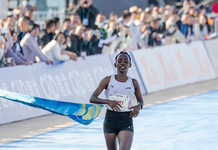
The latest doping case involved a very high-profile athlete, Peres Jepchirchir, an Olympic and World Champion. Kenya has had an estimated 400 to 500 athletes implicated in doping since 2012, whether it be Whereabouts failures, Athletics Biological Passport blood profile anomalies, testing positive, tampering, or other issues.