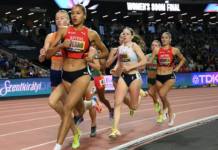

According to European Athletics, sports broadcasts continue to sexualize female athletes through biased camera angles and suggestive editing. These include lingering close‑ups, revealing low angles, and gratuitous slow‑motion replays. These are choices that serve no technical or narrative purpose and instead objectify competitors.
In response, British pole vaulter Holly Bradshaw, Serbian long jumper Ivana Španović, and Croatian high jumper Blanka Vlašić collaborated with the European Broadcasters Union to produce new video‑production guidelines aimed at reducing misrepresentation and objectification. The resulting framework, Raising the Bar, is now published and linked on the European Athletics website as well as the European Broadcast Union’s (EBU) website.
Glen Killane, executive director at the EBU, acknowledges that such production practices have real consequences for athletes, many of whom have formally complained. “We recognize the urgent need to strengthen broadcasting standards to ensure coverage that consistently respects and reflects sportswomen’s skill, strength, and dedication. This is a shared responsibility across our EBU membership.”
Yet even with improved standards, broadcasters cannot fully avoid capturing athletes in vulnerable or revealing positions, particularly in sports where attire is minimal by design. According to World Athletics, responsibility for competition clothing is distributed across multiple parties: the governing body sets the rules, manufacturers design the kit, sponsors dictate branding, national teams approve the final version, and athletes choose what to wear.
Given this shared responsibility, the broadcasting guidelines, while necessary, address only one part of the problem. A more comprehensive approach would also examine how attire is designed, approved, and selected, ensuring that efforts to reduce objectification extend beyond camera work and into the broader ecosystem that shapes how athletes appear on screen.
In fairness, there are low-level and up-close shots from all broadcasters, globally, that can compromise the integrity of the sport.
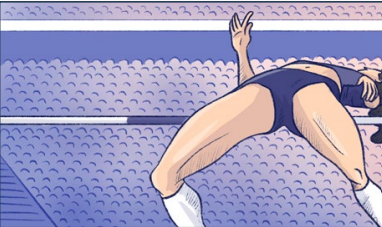
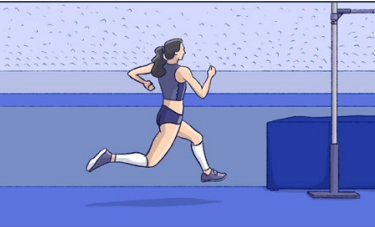
Bradshaw wrote, “The most educational camera angles for pole vaulting focus on the approach and take-off: those crucial last 6 steps, the penultimate stride speed, and the position at take off. Then, showing the inverted technique after leaving the ground.
“Commentators can discuss these technical elements at length with the right replay angles. By focusing on these aspects that make up 90% of the jump, rather than just the bar clearance and landing, we not only provide more valuable insight but also naturally eliminate potentially compromising camera angles.”
True storytelling is both journalistic and artistic in nature; giving broadcasters direction may help solve the issue. However, demanding control over how the story gets told (not necessarily being done here) may lean into a form of censorship; crossing that line appears to be done carefully with thoughtfulness by the three-athlete subcommittee.
In a specific example, to do with female bikini bottoms, there are no competitive advantages for a person to wear bikini bottoms over tights that cover all of the areas of concern with lightweight textiles.
Attire choice, manufacturing and design should be considerations for a working document to create best practices, so that broadcasters and storytellers can freely capture angles in competition; some of the most compelling shots can also be construed as revealing; it’s a fine line.
Ultimately, the intent of the guidelines appears to be a positive direction to capture video and photos with integrity.