

Samuel Fitwi is a 30-year-old Eritrean-born athlete who competes for Germany. He moved there at 17 after fleeing Eritrea with four others to escape the country’s military regime. He was taken in by a family in Stadtkyll, Rhineland-Palatinate, and became a German citizen in 2018.
Fitwi represented Germany in the 10,000 metres at the 2022 European Athletics Championships in Munich, finishing ninth in a personal best time of 28:03.92.
He made his marathon breakthrough at the 2023 Berlin Marathon, running 2:08:28 to move to fourth on the German all-time list. On January 7, 2024, he lowered his PB to 2:06:27, finishing fifth at the Dubai Marathon and earning the Olympic qualifying standard.
Later that year, Fitwi won European bronze in the half marathon team event and finished fifth individually. At the Paris Olympics, he placed 15th in the marathon in 2:09:50.
Fitwi lowered his marathon PB again in December 2024, running 2:04:56 in Valencia. He won the Hannover Marathon in April 2025 in 2:06:29 before taking another major step forward at the 2026 Hamburg Marathon. His runner-up finish behind Morocco’s Othmane El Goumri produced a lifetime best of 2:04:45, moving Fitwi to 10th on the European all-time list.
Personal bests
Marathon: 2:04:45
Half marathon: 1:01:13
10 km: 28:00
10,000m: 2:08.92
5 km: 13:32
5000m: 13:35.56
The interview
Christopher Kelsall: Can you describe the honour of competing for Germany during the 2024 Paris Olympic Games marathon?
Samuel Fitwi: Yes, it was a great honour for me. I will never forget those moments running through the streets of Paris. It was an experience of a lifetime.
CK: You ran 61-minute half marathons weeks before both your personal best performance in Valencia and the Olympic marathon. I assume that these races were on loaded legs while you were in the thick of training. Any chance that you will attempt a faster half marathon soon?
SF: Yes, I see a lot of room for improvement, especially in the half marathon. I was trying to improve my PB in Lisbon this year. I had a good opportunity, but I felt tired from my marathon training block. However, I am optimistic that I can run a sub-60-minute half marathon in the future.
CK: I understand that you did not run in Eritrea. Did you play other sports?
SF: I did not run at all, but I played for the school volleyball team. I believe I was really good and had a lot of potential in volleyball.
CK: Why running?
SF: It was a coincidence because my sports teacher in Germany said, “You’re a good runner,” and sent me to the local club. That was exactly ten years ago now. I’m really thankful that my teacher and my coach saw my talent because I did not know I had it at that time.
CK: Can you describe your training schedule? For example, what does an off-season week look like versus a week closer to race day? And how many weekly kilometres do you get up to?
SF: It really depends on which training block I’m in, but regarding volume, I never go higher than 180 to 200 kilometres per week. During a taper week, I lower the volume by half, so I run around 90 to 100 km. After a marathon, I take a two-week training break and then start building up again with easy runs.
CK: Can you take me through the Paris race? You finished a little more than two minutes from bronze. Would you change anything tactically now that the race is behind you?
SF: I thought about the race quite often afterwards. It was a crazy race because the course was so tough, and it was really hard to prepare for. I think for every marathon runner, it was something very different from a normal flat marathon. Looking back, if I could race it again, I would not go out so aggressively at the beginning and would save more energy for the end. However, my goal was to finish in the top eight, and I tried my best. I’m still happy with my Olympic debut.
CK: Culturally speaking, what are some things about German culture that you enjoy or hope to enjoy?
SF: I think I have learned some good German qualities, such as being disciplined and working hard. These qualities help me become a better athlete.
CK: Likewise, are you continuing to maintain some cultural aspects of your life from Eritrea?
SF: I like the food, especially when I’m at training camps in Ethiopia, where I eat similar dishes. I still listen to Eritrean music and dance to it, so I do not forget where I come from.
CK: A question about super shoes: How much of your training is done in super shoes versus regular trainers?
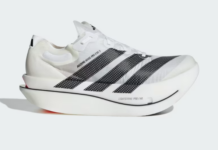
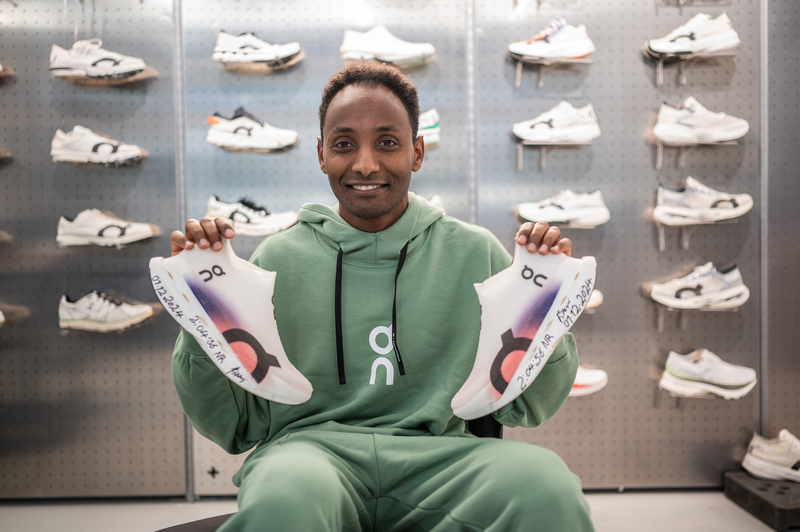
SF: I normally wear my On super shoes at least two or three times a week. I’m really comfortable wearing them, especially for quicker long runs. I recover quite quickly when I wear them. I’m very happy with my super shoes.
CK: Do you spend any time running in minimalist shoes or doing barefoot running?
SF: I walked barefoot my entire life until I came to Germany. Sometimes I wore self-made sandals with minimal soles. However, now I really try to protect my feet because I do so much training.
CK: Your personal best is 2:04:45, and you ran 2:04:56 in Valencia. Can you compare the Valencia course to Hamburg?
SF: That’s a really good question. We were really surprised by how fast the course in Hamburg was. I did not think it would be so quick. However, I believe Valencia is still faster, and you should not forget that in Hamburg there was no wind and the weather conditions were perfect.
CK: If the courses are of similar difficulty, what do you need to do to get into the 2:02 range? Is it a tactical issue, or is it about becoming comfortable with the decision to go out at 2:02 pace?
SF: I think marathon training is all about being consistent, avoiding injuries, and putting in the work. If I do this year after year, I will continue to take the next steps in my development.

CK: How is your training going right now?
SF: I had some really good weeks in St. Moritz, and I’m looking forward to racing at the European Athletics Championships in Birmingham.
CK: Do you get much of a chance to run at altitude? Where would that be?
SF: In recent years, I have spent most of my time at altitude in Addis Ababa. Currently, I’m open to finding new altitude training locations where I can train in the future.
CK: You finished 15th at the Paris Olympic Games. Will you try to race at the Los Angeles Olympic Games to improve that position?
SF: Yes, for sure. Los Angeles is my big goal. I think I will be at a perfect age to run a strong marathon there. My goal is to finish in the top five at the Los Angeles Olympic Games in two years.