
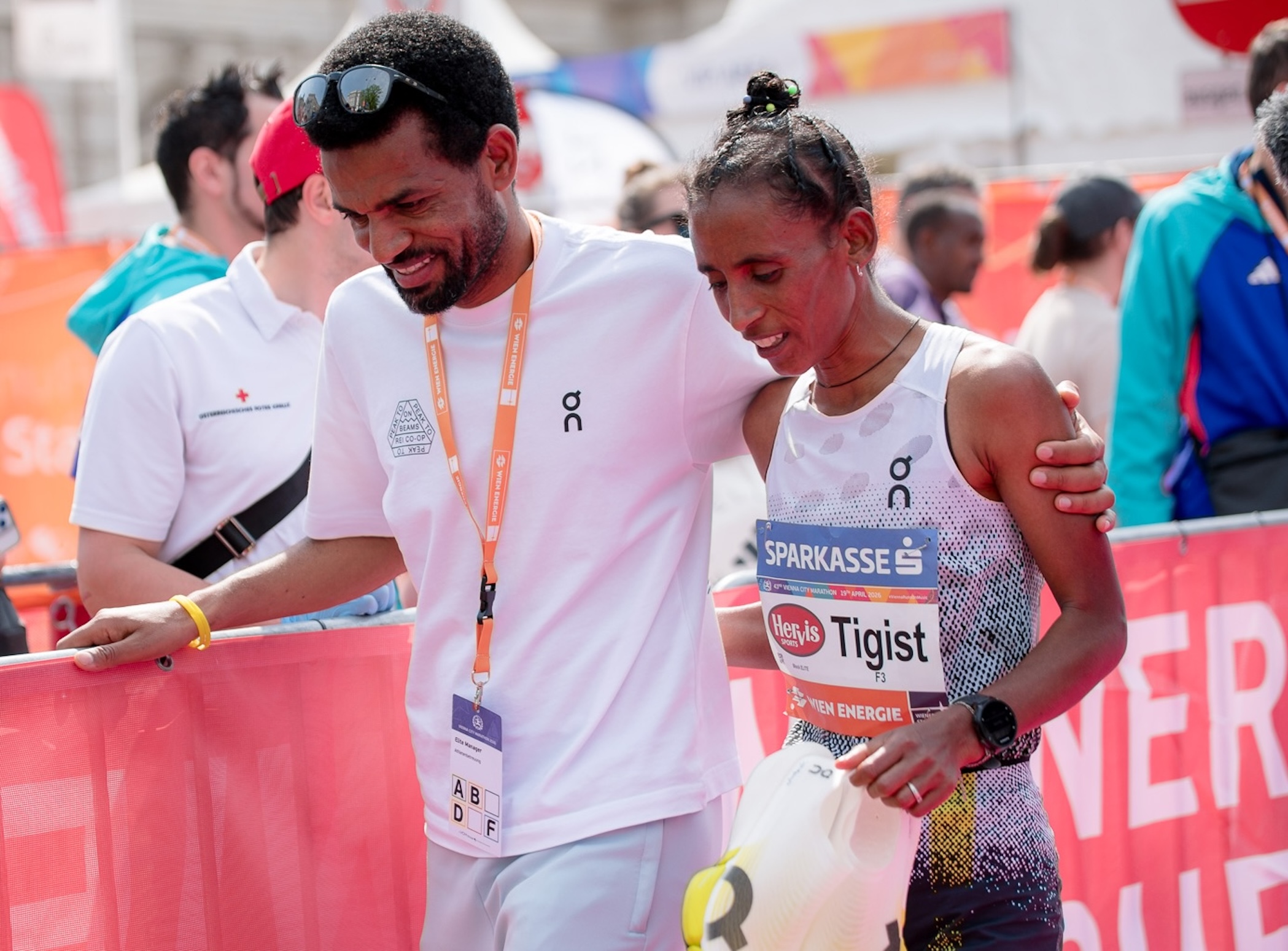
Tigist Gezahagn didn’t just win the Vienna City Marathon; she rewrote the script entirely, the sort of plot twist that forces you to put the coffee down and reread the results to make sure you read correctly. A Paralympic champion stepping into a major-city marathon and dismantling the course record by nearly a minute is the kind of storyline that would get a fiction editor fired for implausibility. Yet there she was in Vienna, 26 years old, visually impaired, and running 2:20:06 as if the streets were laid out solely for her benefit.
This was no one‑off miracle. Vienna was her third straight marathon victory after Ljubljana in October and Doha in January. This is a streak that now looks less like momentum and more like inevitability. Under the guidance of coach Getamesay Molla in Addis Ababa and with Swiss marathon record holder Tadesse Abraham managing her career, Gezahagn has quietly, and now loudly, become one of the most compelling athletes in the sport.
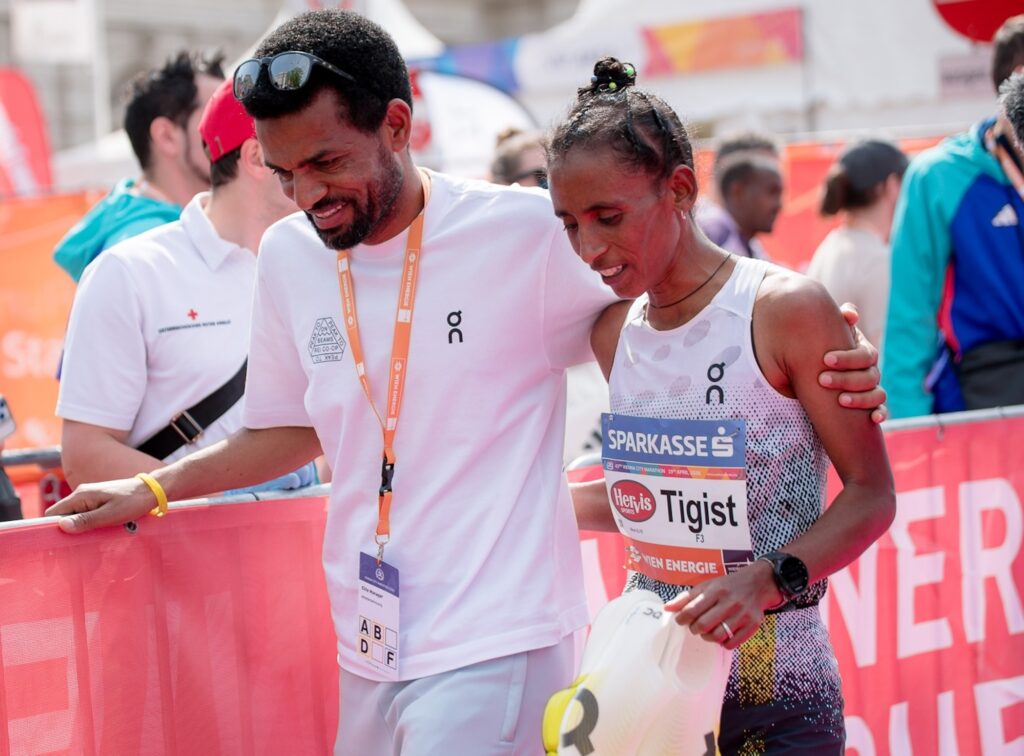
Her backstory reads like a checklist of obstacles designed to keep someone out of elite athletics: no family history in running, parents wary of her even trying, a rural upbringing in Ilani Kersa, and eyesight that began deteriorating before she was old enough to spell “marathon” (የማራቶን). She left school after eight years because she could no longer see the board. Yet she kept running. People told her she should try the Paralympics. She listened. Ethiopia had never won Paralympic gold until she arrived in Tokyo in 2021 and changed that, too.
Her vision remains unstable. She can only see what’s directly in front of her and Abraham admits his heart nearly stopped when she clipped the foot of a runner ahead of her just before 30K in Vienna. Tram tracks, crowds, the usual urban hazards: she navigated all of it behind a pacemaker with the composure of someone who has long since stopped accepting limits imposed by other people’s imaginations.
After winning her second Paralympic 1,500m title in 2024, she left para‑sport entirely, moved to Addis Ababa, and joined Molla’s able‑bodied training group. “I want to live a normal life,” she said, though her definition of “normal” now includes training alongside Amsterdam Marathon champion Anyalem Desta and running times that would place her among the world’s best.
She didn’t expect the transition to go this well. Abraham did. He now believes she can run 2:17 with the right race and the right support. Vienna, he said, was perfect; organizers ensured she had what she needed, and she rewarded them by obliterating their record.
Gezahagn’s story is not tidy, not linear, and certainly not finished. It is, however, unmistakably hers: a visually impaired girl from a farming village who refused to stop running even when she could barely see the path ahead, and who now finds herself at the front of major marathons, rewriting what is possible for athletes who were never supposed to get this far.
And she’s already talking about going faster.
For more information, please visit www.vienna-marathon.com