

© Copyright – 2026 – Athletics Illustrated
The integrity crisis in Kenyan sport shows no sign of easing.
The Anti-Doping Agency of Kenya (ADAK) has provisionally suspended 27 athletes for violating anti-doping rules. This is a development that once again places the East African athletics powerhouse under uncomfortable global scrutiny.
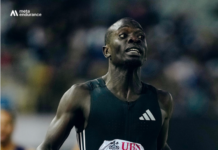
Among the most prominent names is national 400 metres hurdles champion Wiseman Were, whose career had appeared to be ascending. Were made his Olympic debut at the 2024 Paris Summer Olympic Games, advancing to the semi-finals in the 400m hurdles and contributing to Kenya’s bronze medal performance in the 4x400m relay. Earlier this season, he won the 400m hurdles at the Kip Keino Classic, clocking a meeting record and personal best of 48.34 — an interesting move forward from his previous 48.57.
Stay informed. Stay compliant.
— Anti-Doping Agency of Kenya (@ADAKKENYA) March 3, 2026
The Anti-Doping Agency of Kenya (ADAK) has released new and updated provisional suspensions and sanctions.
Visit 🌐https://t.co/UGfepAioZj or https://t.co/BZegkTfFCO to view the latest updates and get accurate, official information. pic.twitter.com/7rcCunvalj
Were is among 27 athletes cited for whereabouts failures—a violation that, while administrative in nature, is treated with severity under the World Anti-Doping Code. Until his case is adjudicated, he remains ineligible to compete.
Also suspended is marathon veteran Rita Jeptoo, now 45, for the presence of prohibited anabolic androgenic steroids. Jeptoo’s name is indelibly linked with the sport’s highest-profile races. A three-time champion at the Boston Marathon (2006, 2013, 2014—the latter in a course record 2:18:57) and a two-time winner of the Chicago Marathon (2013, 2014), she remains one of the most decorated Kenyan women in World Marathon Majors history—and the most shamed.
A common thread among Kenyans are agents and coaches, while unproven, seem to enable the athletes to dope. Case in point, Jeptoo’s agent or former agent, Frederico Rosa.
The issue extends well beyond athletics. Her moral compass lost its magnetic north. Did she think she was going to again be running at an international level at age 45 and not be suspected of doping?
Five footballers were provisionally suspended on December 23, 2025, for whereabouts failures, including Charles Ouma of Kenya Police FC. Others sanctioned include Wilson Kamau Ndungu (formerly of Murang’a Seal), John Collins Njuguna, and Benson Ochieng Oluoch of Nairobi United.
Meanwhile, Rooney Onyango—currently playing for Norwegian side Sogndal Fotball—was flagged separately for a whereabouts failure in February.
In basketball, Christine Akinyi and Christine Mwangale were also cited on December 23, alongside volleyball player Loice Simiyu Masitsa.
Athletics remains central to the narrative. National 110m hurdles champion Michael Musyoka has been suspended for whereabouts failures, as has Bravin Kosgei Kiptoo—the 2024 Africa Military Games 5,000m champion and 2019 African Under-20 10,000m gold medallist.
That the suspensions span athletics, football, basketball, and volleyball underscores the systemic challenge Kenya continues to face. Whereabouts failures are often framed as procedural lapses, they are devices used to manipulate the system.
For a nation whose global sporting identity is so tightly bound to distance running excellence, each announcement from ADAK or the Athletics Integrity Unit carries reputational weight far beyond its borders. The numbers alone tell a story. Whether they also signal reform or repetition remains to be seen.