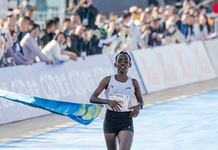


There is a lot to consider as we approach the 2026 Tokyo Marathon. For example, four times someone has won the Tokyo Marathon twice. Only two men and two women have ever solved the riddle of the event twice. On Sunday, defending champions Sutume Asefa Kebede and Tadese Takele will attempt to etch their names deeper into that rarefied ledger when they toe the line once more at the Japanese capital’s World Athletics Platinum Label showcase.
Both Ethiopians tasted triumph on these streets last year. Both returned months later for the global championship marathon and left with unfinished business. Now, back on familiar pavement, redemption and history intertwine. The task will not be gentle. The start lists are thick with major winners, global medallists, and, in the women’s race, a former world record holder whose résumé still casts a long shadow.
Women: speed layered upon speed
The women’s field reads like a chronicle of recent Tokyo excellence. The past four champions assemble, collectively owning the four fastest winning times in race history. Four athletes sit inside the world’s top seven; five rank among the 15 fastest marathoners ever. It is less a race than a summit.
Kebede has, for two years, made Tokyo her theatre. Her 2:15:55 course record in 2024 was a statement of command; her 2:16:31 repeat underscored authority rather than accident. Currently fifth in the world rankings, she arrives seeking restoration after a distant 27th-place finish at the World Championships marathon. Champions often speak of “returning to the scene.” Kebede returns to reclaim it.

Then there is Brigid Kosgei, still fifth on the world all-time list by virtue of her 2:14:04—a world record when set in 2019. The Olympic silver medallist from Tokyo in 2021 rediscovered bite last year with a 2:16:36 victory in Shanghai, her sharpest clocking since winning here in 2022. A second Tokyo crown would place her among the event’s most enduring figures.
World No.4 Hawi Feysa may represent the sharpest edge of the present tense. Her 2:14:57 personal best to win Chicago in 2025 elevated her to seventh on the all-time list—remarkable economy from just five marathons. Third here last year, she returns not as a hopeful, but as a threat.
Rosemary Wanjiru, the 2023 champion, has been a study in consistency: second in 2024 with a 2:16:14 PB, fifth last year, then victorious in Berlin. Megertu Alemu brings podium credentials from London and Chicago, plus a Valencia victory, though recent DNFs in Shenzhen and Xiamen suggest volatility. Talent is unquestioned; stability will decide her Sunday.
Emerging Ethiopian Bertukan Welde is still early in her education at 42.2 kilometres — this will be her fourth marathon — yet her trajectory points upward: 2:20 in Prague, 2:17 in Amsterdam, and a confident season-opening half-marathon win in Montferland.
Depth extends further: Mestawut Fikir, Mekides Shimeles, Japan’s Ai Hosoda, American veteran Sara Hall, and Kenya’s debutante Grace Loibach Nawowuna ensure the pace cannot slacken without consequence.
Men: experience meets ascent
If the women’s race is layered with proven speed, the men’s contest is built on density. Tadese Takele stands at its centre. The former steeplechaser—African silver medallist in 2022—transitioned seamlessly to the marathon, debuting at 2:03:24 in Berlin before trimming to 2:03:23 in his Tokyo victory. Still only 23 and with three completed marathons, his ceiling remains speculative. After a World Championships DNF, he returns not merely to defend, but to reaffirm.
Kenya’s Timothy Kiplagat owns the fastest personal best in the field at 2:02:55, achieved when second here in 2024 in the race that produced the 2:02:16 course record. Recent results have been quieter, yet pedigree lingers.
Alexander Mutiso Munyao, winner of London in 2024 and third there in 2025, combines tactical intelligence with a 2:03:11 best. Milkesa Mengesha, victorious in Berlin in 2024 (2:03:17) and Shanghai later that year, arrives ranked fourth in the world—the highest of the entrants.
Consistency belongs to Vincent Kipkemoi Ngetich, third in Tokyo the past two editions and a 2:03:13 performer. Fellow Kenyan Geofry Toroitich Kipchumba progressed from sixth here on debut to a 2:03:30 win in Amsterdam.

The narrative threads deepen with track royalty testing the road. Selemon Barega returns to the city of his Olympic 10,000m triumph (Tokyo 2021), having debuted over the marathon in 2:05:15 in Seville. Two-time world 5000m champion Muktar Edris clocked 2:05:59 in his Boston debut last year. Their learning curves continue under unforgiving arithmetic.
Further intrigue comes via former Chicago winner Seifu Tura and 2023 Tokyo champion Chalu Deso Gelmisa. Canada’s national record-holder Cam Levins returns, as does Italy’s world bronze medallist Iliass Aouani. Japanese hopes will lean on national record-holder Suguru Osako and former record-holder Kengo Suzuki, each capable of lifting the tempo should the race hesitate.
History in waiting
Tokyo’s broad avenues often reward courage over calculation. Records have fallen here; reputations have been remade. On Sunday, Kebede and Takele chase more than victory. They pursue entry into a club of four—a statistic that seems modest until one considers how many have tried.
In a city that blends precision with spectacle, the marathon will again demand both.
Start times
Official Start (Gun Time)
Tokyo local time (JST): 9:10 AM on Sunday (Japan Standard Time)
Converted Start Times
GMT (Greenwich Mean Time / UTC): 00:10 AM (next day) — midnight plus 10 minutes (early morning)
EST (Eastern Standard Time): 7:10 PM (previous day) — e.g., Saturday evening before the Sunday race
PST (Pacific Standard Time): 4:10 PM (previous day) — Saturday afternoon
Summary Table
Time Zone Start Time (Marathon)
Tokyo (JST) 9:10 AM
GMT / UTC 00:10 AM (same calendar night)
EST (USA) 7:10 PM (Sat)
PST (USA) 4:10 PM (Sat)
Seeded athletes
Women
Brigid Kosgei (KEN) 2:14:04
Hawi Feysa (ETH) 2:14:57
Sutume Asefa Kebede (ETH) 2:15:55
Rosemary Wanjiru (KEN) 2:16:14
Megertu Alemu (ETH) 2:16:34
Bertukan Welde (ETH) 2:17:56
Mestawut Fikir (ETH) 2:18:48
Mekides Shimeles (ETH) 2:19:56
Aberu Ayana (ETH) 2:20:20
Waganesh Mekasha (ETH) 2:20:26
Ai Hosoda (JPN) 2:20:31
Azmera Gebru (ETH) 2:20:48
Sara Hall (USA) 2:20:32
Viola Cheptoo (KEN) 2:21:40
Pascalia Jepkogei (KEN) 2:22:47
Yumi Yoshikawa (JPN) 2:25:20
Grace Loibach Nawowuna (KEN) debut
Men
Timothy Kiplagat (KEN) 2:02:55
Alexander Mutiso Munyao (KEN) 2:03:11
Vincent Kipkemoi Ngetich (KEN) 2:03:13
Milkesa Mengesha (ETH) 2:03:17
Tadese Takele (ETH) 2:03:23
Geofry Toroitich Kipchumba (KEN) 2:03:30
Dawit Wolde (ETH) 2:03:48
Daniel Mateiko (KEN) 2:04:24
Seifu Tura (ETH) 2:04:29
Chalu Deso Gelmisa (ETH) 2:04:53
Suguru Osako (JPN) 2:04:55
Kengo Suzuki (JPN) 2:04:56
Selemon Barega (ETH) 2:05:15
Shifera Tamru (ETH) 2:05:18
Cam Levins (CAN) 2:05:36
Ryota Kondo (JPN) 2:05:39
Suldan Hassan (SWE) 2:05:57
Muktar Edris (ETH) 2:05:59
Tsubasa Ichiyama (JPN) 2:06:00
Iliass Aouani (ITA) 2:06:06
Simon Kariuki (KEN) 2:06:29