

© Copyright – 2025 – Athletics Illustrated
On September 11, 2025, the World Anti-Doping Agency (WADA) declared that the Anti-Doping Agency of Kenya (ADAK) is not compliant with the WADA code. WADA warned that ADAK will need to become compliant or face suspension by Oct. 2.
“The signatory has 21 days following the date of receipt of the formal notice of non-compliance to dispute WADA’s allegation of non-compliance as well as the proposed consequences. It should be noted that the decision (including the consequences) will enter into force on 2 October 2025, unless the decision is challenged before the same date.”
We provide an update on the compliance status of the National Anti-Doping Organization of Kenya. https://t.co/JJMpTDgD83
— WADA (@wada_ama) October 3, 2025
If ADAK were ruled non-compliant, it would lose WADA funding and program access; Kenyan representatives would be barred from WADA boards and committees; and Kenya would not be eligible to host regional, continental, or global championships.
Athletes would continue to be able to compete internationally.
It is World Athletics that would need to step in to bar Athletics Kenya from keeping athletes from competing internationally, as the organization has done with Russia.
Kenya’s efforts
During the 21 intervening days, Kenya’s President William Ruto agreed that reforms are needed. At that time, he asked his sports minister to oversee a restructuring.
“We will do whatever it takes. We will reorganize ADAK properly and inject professionalism,” Ruto told the media.
WADA noted that ADAK made progress during the 21 days.
ADAK has created a four-month plan with critical requirements to be achieved, as identified by a May 2025 WADA audit.
The matter and four-month plan are currently being reviewed.
The consequences, should ADAK be found non-compliant, include not having representation in any WADA office, board or committee; ineligibility to host any WADA-organized event and loss of funding from the agency.
More than 400 athletes have been suspended since 2016 for doping-related offences. This includes testing positive for banned performance-enhancing drugs, tampering, whereabouts failures, and Athlete Biological Passport anomalies from tests.
High-profile doping cases
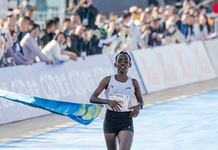
Some of those athletes include world record holders like Ruth Chepngetich, who won the Chicago Marathon in October 2024 in a time of 2:09:56.
In June 2020, Wilson Kipsang was issued a four-year ban backdated to January 2020 due to anti-doping rule violations. He had four “whereabouts failures” between April 2018 and May 2019, and was found to have tampered with the investigation by providing false evidence.
Kipsang won the Tokyo, Berlin, New York, and London (twice) marathons. His personal best is 2:03:13.
In 2014, Rita Jeptoo tested positive for EPO. She won the Chicago, Boston and Milan marathons. Before Super Shoes, she ran 2:19:57.
Jemima Sumgong‘s official profile on World Athletics lists her as an Olympic marathon champion. She had a best of 2:20:48. However, her career ended early when she was given a two-year ban for a doping violation, later increased to four years, following a positive test for EPO in 2017.
Asbel Kiprop was suspended for doping. In May 2018, it was announced by Athletics Kenya that one of, if not the greatest, all-time middle-distance runners had tested positive for EPO.
The 28-year-old is a living legend. He owns three gold medals from the World Championships and an Olympic gold.
His personal bests are 800-metre 1:43.18, 1500-metre 3:26.69, 1609-metres (mile) 3:48.50 and 3,000-metres 7:42.32.
His agent, Frederico Rosa, is also Chepngetich, Jeptoo and Sumgong’s agent.








 is not yet been banned by the World Anti-Doping Agency (WADA))