
© Copyright – 2026 – Athletics Illustrated
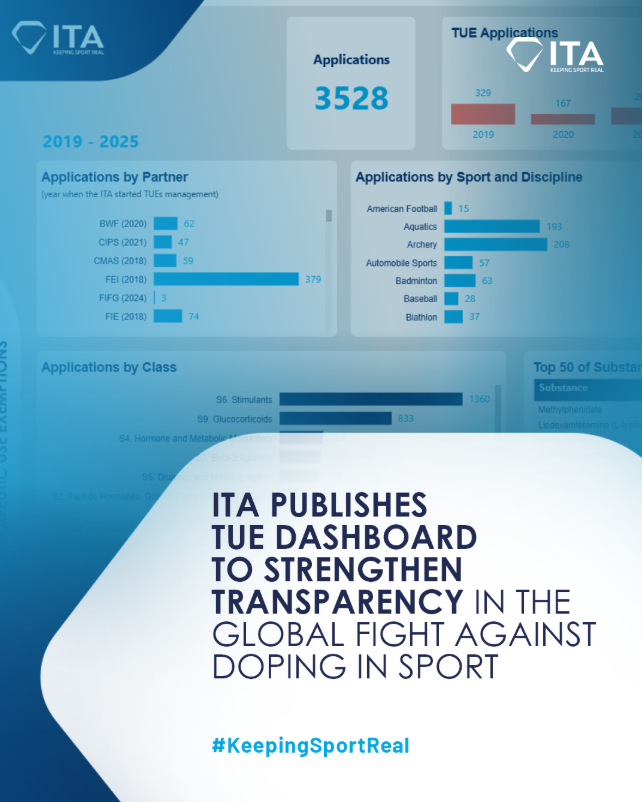
The International Testing Agency (ITA) took a step toward greater transparency in March 2026 by launching its first public Therapeutic Use Exemption (TUE) dashboard. The dashboard provides a unique insight into how frequently athletes request permission to use otherwise prohibited medications.
The dashboard recorded 3,528 TUE applications over the previous seven years. Of those, 2,361 were approved, 903 were withdrawn or deemed unnecessary, 75 were rejected, and 186 remained under review, with many still pending.
Users can explore application trends over time, approval rates, sports involved and the categories of substances requested. The ITA maintains that there is no scientific evidence that a properly granted TUE provides athletes with a competitive advantage. It processed approximately 650 applications in 2023, a figure that climbed to roughly 850 in 2025.
Russia
Against that backdrop, the Russian Anti-Doping Agency (RUSADA) has reported a record pace for TUE applications in 2026.
According to the Russian state news agency TASS, RUSADA has submitted 101 TUE applications since the beginning of the year, with 79 already approved.
The trend follows a sharp increase in recent years. RUSADA processed 204 TUE applications in 2025, up from 141 in 2024. Just two years earlier, the total stood at 78.
The rising numbers naturally invite questions. Are more Russian athletes developing legitimate medical conditions requiring prohibited medications? Has awareness of the TUE process improved? Or are more athletes and their medical teams simply making greater use of a system available to competitors worldwide?
A TUE allows an athlete to use a substance or method on the World Anti-Doping Agency’s Prohibited List when there is a genuine medical necessity and all criteria outlined in the World Anti-Doping Code have been satisfied.
It is worth noting that the increase in TUE applications is not unique to Russia. The ITA’s own data show that applications have risen internationally over the past several years.
Nevertheless, Russian anti-doping activity continues to attract greater scrutiny than that of most nations. Russia’s sporting system has been at the centre of one of the largest state-backed doping scandals in history, resulting in years of sanctions and ongoing monitoring. Separately, Russian athletes remain largely excluded from international competition in many sports following Russia’s invasion of Ukraine.
Whether the current increase in TUE applications reflects changing medical needs, improved compliance or another factor is not clear from the available data alone. The figures, however, underscore the value of greater transparency as anti-doping authorities continue to open previously inaccessible information to public scrutiny.